
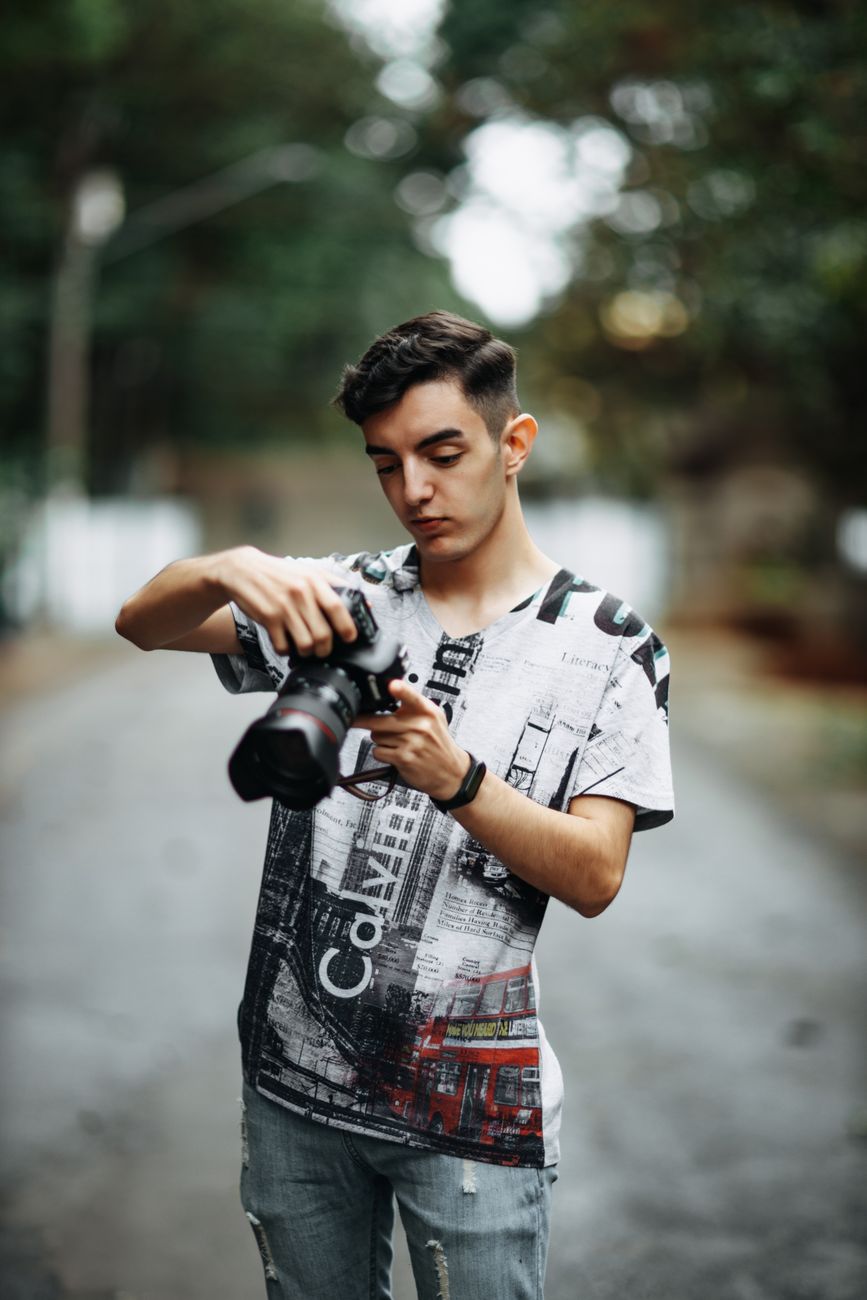
While I was still a teenager, I was at a basketball game watching my school dominate another team when I noticed someone underneath the hoop taking action shots of the players. During a free throw, I heard the sound of the motor drive going off and thought to myself “That looks like fun!”. I approached the person after the game and found out he was from the local newspaper and picked his brain about photography for about 5 minutes before he left to go develop the pictures. Yes, this was back in the days of film.
That was the moment that I was bit by the ‘shutterbug’.
The next day, I approached the photography advisor, a senior who was responsible for the yearbook photographs, and asked if I could be part of the team. Since she was the only one who was doing it, she eagerly agreed and I soon became a photographer for the yearbook staff with little to no knowledge of what I was doing. Lori helped me understand how to process the negatives, and then turn those into images by projecting the image onto paper and processing that into the final image. I can still smell the developer, stop bath, and fixer.
At the end of the year, when Lori graduated, she handed me the keys and said “Here you go, you’re in charge now! You get to teach the next round of photographers moving forward.” Yes, the guy who had just learned how to push the shutter button and barely knew how to compose a shot was now going to be “in charge.” I was terrified. I knew about 10 percent of what I thought I needed to know, but I pushed through it anyway. It took a few months, and lots of mistakes and resources, for me to begin to learn the tricks and find resources to help me shoot better. In the end, I did just fine, and graduated in 1990 leaving some very talented kids in charge. Fortunately, that was not the end of my photographic career… I yearned for more.
Right after high school, I was asked what I wanted to do with photography. Having no idea what the possibilities were at the time, I said I wanted to shoot for a magazine or newspaper. Those were my goals at the time. The best way to learn was to get a job in photography, but I had only begun to learn the rules and so it never really took off. After a few years, I was able to find a job working as a portrait photographer for Olan Mills, where I became a very good portrait photographer and Studio Manager for a couple of years. Prior to that job, I did not think I could make money in photography. That job basically proved that I could make a living doing something that I had grown to love.
Over the course of my life I have photographed just about everything you could do with photography. For many years, I did what I would call ‘amateur’ photography where charge people $50 to photograph just about anything. Weddings, portraits, candid photos, I did it all. Then, in 2017, I was laid off from Symantec after 20 years which provided me with the opportunity to return to school and get a degree in business. In one of the first classes I went to, a spokesperson came into the class and discussed the school paper, The Torch, and how they were looking for people to work for them.
My first assignment was to capture photos of an author at a local bookstore. They did not have enough reporters in the pipeline yet – so I volunteered to write the article as well. I had become a photojournalist. In my second year as a staff photographer, I was ‘dispatched’ to Salem to cover the rally for education funding. One of those images was selected and received first place for best feature photo in the Oregon Newspaper Publishers Association’s Collegiate Newspaper Contest. There I was fulfilling my dreams of being an award-winning photographer for a newspaper.
Around that same time, I started photographing with a friend of mine, Greg Byerly, at his local tattoo shop/photo studio. I was not very experienced in this type of photography but found it to be very much like the portrait training I had before. Greg had suggested sending some of my images to several overseas magazines that were looking for work – so after much prodding, I submitted some of my work to these magazines in hopes that I would get published. It didn’t just happen once, or twice, but I was published in several publications both here in the US and overseas. I was now able to say that I had some of my work published in a magazine. While it wasn’t National Geographic, it was a magazine, so I had accomplished another one of my dreams.
I never actually knew where photography was going to take me, I thought I wanted to shoot for a newspaper or magazine, then I became a portrait photographer. Then I became a studio manager, amateur photographer, photojournalist, won awards for photojournalism, and then was published internationally. None of these things were really part of a plan. I didn’t sit down at 17 and create a 30-year photography career – I just saw something interesting and though it looked like fun. With no experience, I tried it. Then someone handed me the responsibility before I was ready, and I figured it out. And when another opportunity appeared, I tried that too. Then another.
That’s possibility.
In retrospect, I realize now that I never really had a plan for photography. I had ideas, but I had no idea of what was actually possible. At 17, I thought that shooting for a newspaper or magazine was the big goal because those were things that I new existed. I did not have a clue about all of the other opportunities that would come along. I didn’t know I could make money taking portraits. I didn’t know I could manage a studio. I didn’t know I could become a photojournalist. I certainly didn’t know that some of my photographs would eventually be published in magazines in other countries.
Each time I thought I had reached the edge of what photography could offer me, another door opened.
The funny thing is, I didn’t really open most of those doors myself. I usually just noticed that they were there. Someone needed a photographer. Someone asked if I could help. Someone suggested I submit my work. Someone gave me an opportunity. And I said yes before I really knew what saying yes was going to mean.
Maybe that’s what I’m beginning to understand about possibility. It isn’t necessarily about having a giant plan for the future. It’s about realizing that the future contains things I haven’t even thought about yet.
That’s a strange concept for someone who spent most of his adult life trying to anticipate problems before they happened. I have spent a lot of time thinking about what could go wrong. I’m beginning to wonder what happens when I spend some of that energy thinking about what could go right.
What if there are things I haven’t even considered because I didn’t think they were options?
I’ve started doing that in little ways lately. Going camping without knowing exactly how the weekend is going to turn out. Getting in the car and letting someone else decide where we’re going. Trying something simply because it sounds interesting. Spending time with someone without needing to know exactly where the relationship is going.
None of those things seem particularly revolutionary. But for me, they are. I’m realizing that I don’t need to know what something is going to become before I allow it to begin.
Certainty has always been pretty comfortable for me. If I know what is going to happen, I can prepare for it. If I can prepare for it, I can probably solve whatever problem comes up.
Possibility doesn’t work that way. Possibility requires a little uncertainty. You have to be willing to say, “I don’t know what happens next.”
And maybe that’s exactly why I’m starting to like it.
I think about that 17-year-old kid sometimes who was terrified when Lori handed him the keys. He knew he wasn’t ready. He knew there were things he didn’t know. But he also didn’t know what was possible yet. Maybe that’s an important distinction. I knew I wasn’t ready. I just didn’t know that being ready wasn’t required.
I don’t know what the next year will look like. I don’t know what new places I’ll see, what I’ll learn, what I’ll build, who I’ll meet, or what I’ll discover about myself. And for once, I don’t find that particularly frightening. I’m actually kind of curious.
Because if my history with photography has taught me anything, it’s that the things I haven’t imagined yet might be the most interesting things of all.
I don’t know what’s possible yet. And that’s kind of the point.